Aluminium cladding is becoming an increasingly familiar feature across contemporary residential and commercial projects. From creating a statement entrance or highlighting an extension to covering larger sections of a building façade, it offers installers another way to introduce clean lines, texture and architectural detail to a project.
But aesthetics are only part of the picture.
For installers, builders and contractors, the choice of cladding also needs to work from a practical perspective. Installation, durability, maintenance, configuration and compatibility with the overall building design all need to be considered.
So, what should you know when aluminium cladding is being considered for your next project?
What is Aluminium Cladding?
Aluminium cladding is an external finishing system that uses aluminium profiles or panels to create a protective and decorative outer layer on a building.
It can be used across anything from a relatively small architectural feature to a much larger façade on either residential or commercial projects.
Where Can Aluminium Cladding Be Used?
One of the advantages of aluminium cladding is its versatility.
On residential projects, it can be used to add interest to new-build homes, extensions and renovation projects. Rather than covering an entire property, cladding is often used selectively to create contrast or draw attention to a particular architectural feature.
Typical applications can include:
- Entrances and door surrounds
- Extensions
- Upper storeys
- Gable areas
- Garden rooms and contemporary outbuildings
- Feature sections alongside windows and doors
- Larger external elevations
It can also be used on commercial developments where a clean, contemporary and low-maintenance façade is required.
The ability to combine cladding with other materials such as brick, render, stone and glazing gives designers considerable freedom to create contrast across an elevation.

Colour and finish matter
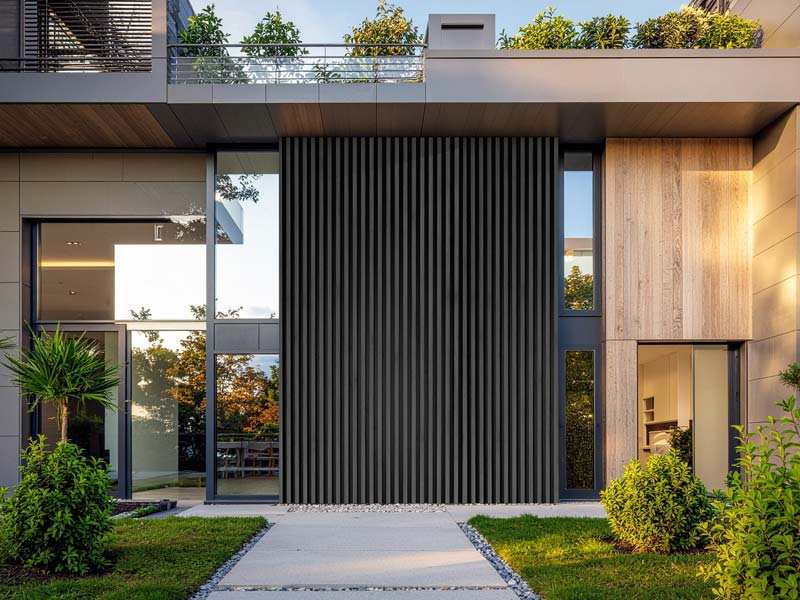
Anthracite grey and black remain natural choices for contemporary projects, particularly where the cladding is being coordinated with aluminium windows and doors.
They are far from the only possibilities.
Depending on the system, aluminium cladding can be powder coated in a variety of colours, making it possible to complement or deliberately contrast with other elements of the building.
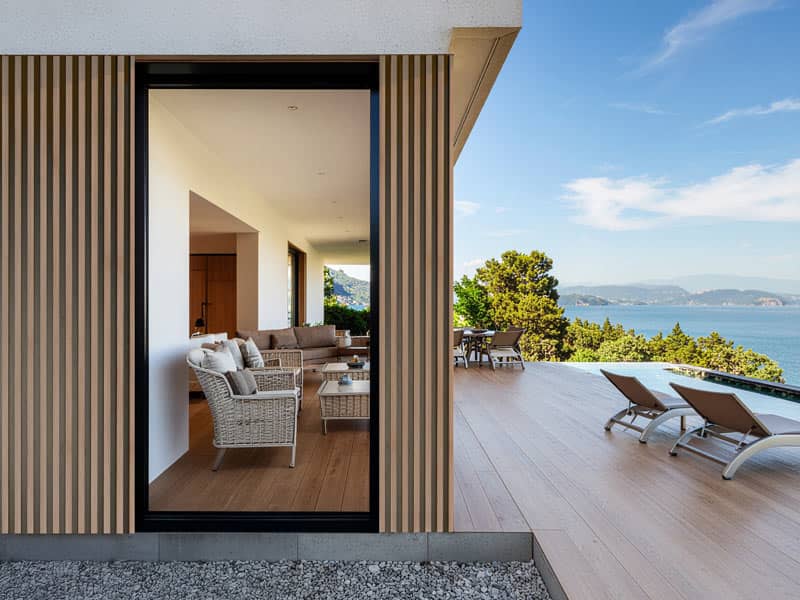
Wood-effect finishes provide another interesting option. They introduce some of the visual warmth associated with timber while retaining many of the practical characteristics of aluminium.
This can work particularly well where a project needs a softer or more natural-looking contrast to glazing, brickwork or render.
Why consider aluminium instead of timber?
Timber remains a popular façade material and can create a distinctive natural appearance, but it also comes with ongoing maintenance considerations.
Exposure to sunlight, moisture and changing weather conditions means timber may require periodic treatment or refinishing to maintain its appearance and protection.
Aluminium offers a different proposition.
It won’t rot in the way timber can and generally requires little ongoing maintenance beyond routine cleaning. A quality powder-coated aluminium finish also provides good resistance to everyday weathering.
For projects where the customer wants the appearance and architectural detail of cladding without committing to regular maintenance, aluminium can therefore be worth considering.
Durability and maintenance
External building materials inevitably have to deal with the British weather.
Aluminium is naturally resistant to corrosion and allows the to retain its appearance with relatively little maintenance. For homeowners and commercial property owners, that can be particularly attractive, especially in areas that may be difficult to access once a project has been completed.
From an installer’s perspective, it also provides another useful option when customers specifically ask for exterior materials that won’t require regular painting or treatment.
As with any external system, appropriate cleaning and maintenance should still be carried out in accordance with the manufacturer’s recommendations.
Think about the complete façade
Cladding is often most effective when it isn’t considered in isolation.
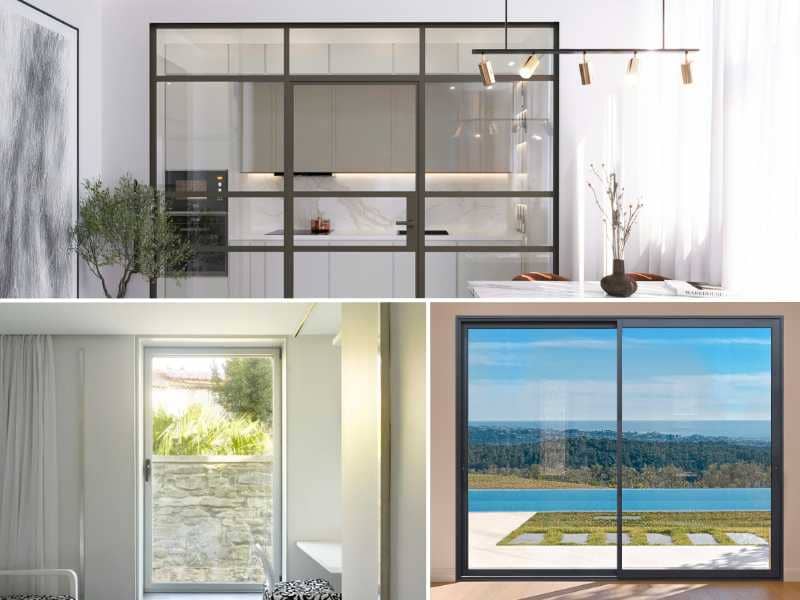
Window frames, entrance doors, bifold doors and sliding doors can all form strong visual elements within an elevation. Coordinating these with the cladding can create a much more considered overall appearance.
That doesn’t necessarily mean everything needs to be exactly the same colour.
Matching finishes can create a clean, uniform look, while contrasting colours or wood-effect cladding can make windows and doors stand out as deliberate architectural features.
For installers already supplying aluminium glazing, discussing the façade as a whole can therefore open up some interesting design possibilities for the customer.
Planning a project involving aluminium cladding?
Find out more about Cortizo Cladding Pro or contact the DRS team to discuss your next project.